Divine Wisdom and Truth in 1 Samuel 7

A nation can carry the symbols of faith and still miss the heart of faith. That is one of the sharp lessons of 1 Samuel 7. Israel has seen the ark of the covenant return, but the chapter does not treat the ark like a charm or a trophy. It points the people back to repentance, worship, obedience, and trust in the living God.
In the Catholic reading of Scripture, 1 Samuel 7 is more than history. It is a lesson in conversion. God does not merely rescue Israel from the Philistines. He calls Israel to return with the whole heart. Samuel stands as prophet, judge, and intercessor, showing what faithful leadership looks like when a people has wandered far from the Lord.
The chapter’s wisdom is simple and demanding: the Lord helps those who return to Him sincerely. Its truth is just as clear: God is holy, merciful, and faithful, but He will not share the human heart with idols.
The ark returns, but Israel still needs conversion
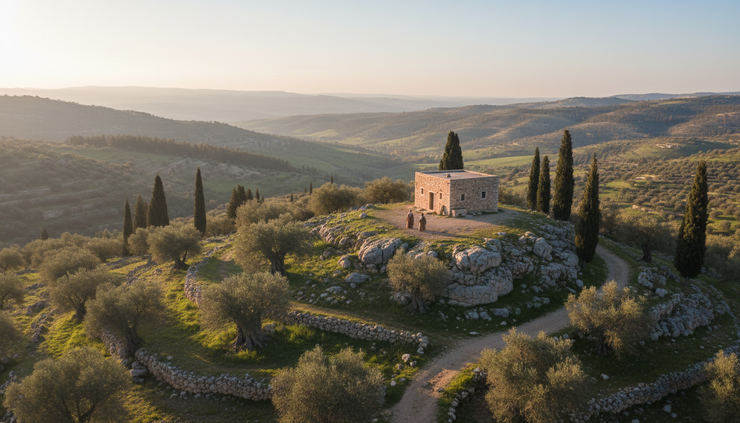
At the start of 1 Samuel 7, the ark of the Lord is taken to Kiriath-jearim. It remains in the house of Abinadab, and Eleazar is consecrated to guard it. This follows the painful events surrounding the ark in earlier chapters, when Israel treated the sacred object as if possession of it guaranteed victory.
That mistake matters. The ark was holy because it belonged to God’s covenant presence among His people. It was never meant to replace faith, obedience, or worship.
For about 20 years, the people of Israel lament after the Lord. That long period tells us something vital about spiritual renewal. Returning to God is not always instant. Sometimes a community has to feel the weight of its distance from Him. Sometimes grief becomes the doorway to grace.
Catholic faith recognizes this pattern in the life of the soul. A person may still know the prayers, attend the sacred rites, or possess religious reminders, yet still need real conversion. The outward signs matter, but they must lead inward, to love of God and obedience to His will.
The ark’s presence in 1 Samuel 7 does not solve Israel’s crisis by itself. The people need to turn back. They need to reject false gods, confess sin, and seek the Lord with one heart.
That is the first act of Divine Wisdom and Truth in 1 Samuel 7: holy things must be approached with holy hearts.
Samuel calls Israel to return with the whole heart
Samuel speaks plainly to Israel. If they are returning to the Lord, they must do it completely. They must remove the Baals and Ashtaroth from among them, direct their hearts to the Lord, and serve Him alone.
This is not vague spirituality. Samuel does not tell them to feel religious. He calls for a visible break with idolatry.
In the ancient world, Baal and Ashtaroth were linked with fertility, power, and protection. For Israel, worshiping them was not harmless curiosity. It was betrayal of the covenant. The Lord had delivered His people and called them to belong to Him. To mix the worship of God with idol worship was to divide the heart.
The same truth applies in every age, though the idols often change form. An idol is anything treated as a final source of security, meaning, or identity apart from God. It can be success, approval, pleasure, control, comfort, resentment, or fear. Even good things can become false gods when they claim the place that belongs to the Lord alone.
Samuel’s words reveal a spiritual law:
A divided heart cannot fully receive the peace of God.
The Lord does not call Israel back because He lacks power. He calls them back because they lack fidelity. Their problem is not only external oppression by the Philistines. It is internal disorder before God.
This is why repentance in Catholic life is never only regret. It includes turning away from sin and turning toward the Lord. It means naming what has taken God’s place and letting grace reorder the soul.
Samuel’s message is merciful because it is truthful. He does not flatter the people. He does not pretend idolatry is a small matter. He shows them the path back to life.

Mizpah shows the shape of repentance
Samuel gathers Israel at Mizpah. The people draw water and pour it out before the Lord. They fast, and they confess, “We have sinned against the Lord.” Samuel judges Israel there.
This scene is rich with meaning. The pouring out of water can be understood as a sign of humility, surrender, and helplessness before God. Water poured onto the ground cannot be recovered. In that image, Israel admits its need. The people stand before God with nothing to hide and nothing to claim.
Their fasting also matters. Fasting is not a performance. It is a bodily prayer. It says that the soul hungers for God more than for comfort. In Catholic practice, fasting remains a holy discipline because it teaches the body to serve the soul, and the soul to seek God.
Then comes confession. Israel does not say, “We made mistakes,” or, “The circumstances were difficult.” The people say they have sinned against the Lord. They name the truth before God.
This is one of the great biblical roots of authentic repentance. Sin is not merely poor judgment. It wounds communion with God. It damages the person, the community, and the covenant relationship. Healing begins when the truth is spoken.
Samuel’s role at Mizpah also deserves attention. He judges Israel, but his judgment is not cold punishment. It is ordered toward restoration. He leads the people into right relationship with God.
Catholic readers can see here a pattern that echoes through the life of the Church:
The people gather before God.
Sin is confessed honestly.
Fasting and prayer express repentance.
A faithful servant intercedes.
God acts with mercy and power.
Mizpah teaches that true repentance is not private emotion alone. It becomes worship. It becomes obedience. It becomes a return to covenant life.
The Philistine threat reveals the power of intercession
As Israel gathers at Mizpah, the Philistines hear of it and come up against them. The people become afraid. Their fear is understandable. They are not gathered for battle. They are gathered in repentance.
Yet their response shows that something has changed. Instead of reaching for the ark as a religious weapon, they ask Samuel to keep crying out to the Lord for them.
This is a major turning point. Israel has moved from presumption to dependence. They no longer assume they can control God’s power. They ask for prayer.
Samuel offers a suckling lamb as a burnt offering and cries out to the Lord. The Lord answers. As the Philistines draw near, God throws them into confusion with a mighty thunder, and Israel defeats them.
The victory belongs to God. Israel still acts, but God delivers. This balance appears often in Scripture. Human cooperation matters, but grace comes first. God’s people are not passive, but they are not self-sufficient.
Samuel’s intercession also points forward. In Catholic understanding, the role of the intercessor reaches its fullness in Jesus Christ, the one mediator between God and humanity. The prayers of the saints, the prayers of the Church, and the prayers we offer for one another all depend on Christ’s perfect intercession.
Samuel stands as a faithful servant who pleads for the people. His prayer is not magic. It is covenant faithfulness. He cries out because he trusts the Lord.
The lesson is deeply practical. When fear rises, the faithful response is not panic, denial, or self-reliance. It is prayer joined to obedience.

Ebenezer teaches Israel to remember grace
After the victory, Samuel sets up a stone between Mizpah and Shen. He names it Ebenezer, saying that up to that point the Lord has helped them.
The stone is not an idol. It is a memorial. It teaches the people to remember. Israel needs memory because forgetfulness often leads to sin. When the people forget God’s mercy, they become vulnerable to fear, pride, and false worship.
Ebenezer means “stone of help.” It marks a place where God rescued His people after they returned to Him. It does not celebrate Israel’s strength. It celebrates God’s faithfulness.
This is a needed truth for the spiritual life. People often remember wounds more easily than graces. They can recall failures in sharp detail, yet forget the many times God sustained them. A holy memory fights despair. It says, “The Lord helped me then. I can trust Him now.”
Catholic life is full of sacred remembrance. The highest form is the Eucharist, the memorial of Christ’s sacrifice, made present sacramentally. The Church does not remember as mere nostalgia. She remembers in faith, worship, and thanksgiving.
Ebenezer is much smaller than the Eucharistic mystery, but it shares a biblical instinct: God’s saving works must not be forgotten.
The chapter then tells us that the Philistines are subdued during Samuel’s days, and the territory taken from Israel is restored. There is also peace between Israel and the Amorites. Samuel continues as judge, traveling each year to Bethel, Gilgal, and Mizpah, then returning to Ramah, where he builds an altar to the Lord.
The chapter ends with order restored. Worship, judgment, leadership, and peace are brought back into proper relation under God.
Divine wisdom in the chapter is both personal and communal
1 Samuel 7 speaks to the individual soul, but it also speaks to families, parishes, and nations. Israel’s crisis is shared. Its repentance is shared. Its deliverance is shared.
Sin often begins in personal compromise, but it rarely stays private. Idolatry reshapes a culture. Fear spreads through a people. False worship weakens courage. By contrast, repentance also has communal power. When people seek God together, they learn again how to live in truth.
The chapter gives several clear marks of spiritual renewal.
Wholehearted return
Samuel does not ask for a partial return. The Lord desires the whole heart. Divided loyalty keeps the soul restless.
Renunciation of idols
Israel must put away false gods. Repentance includes removal. Some attachments cannot be purified while they remain enthroned.
Honest confession
The people admit their sin before the Lord. Grace meets truth, not self-deception.
Prayer and sacrifice
Samuel cries out and offers sacrifice. Israel’s hope is not in strategy alone, but in God’s mercy.
Grateful remembrance
The Ebenezer stone guards the memory of help received. Gratitude strengthens faith for future trials.
These are not ancient lessons only. They remain living wisdom.

The divine truth revealed in God’s response
The Lord’s response in 1 Samuel 7 reveals His character. He is not indifferent to idolatry, yet He is ready to receive the repentant. He allows Israel to feel the misery of distance from Him, yet He does not abandon His people when they return.
This is the balance of divine truth. God’s mercy does not erase His holiness. His holiness does not cancel His mercy.
The thunder against the Philistines shows God’s power over Israel’s enemies. The restored towns show His care for their life in the land. The peace that follows shows that repentance brings more than rescue from danger. It restores order.
Samuel’s steady ministry also shows that renewal must be guided. Israel needs more than a dramatic moment. The people need faithful teaching, judgment, prayer, and worship over time. Samuel provides that stability through the Divine Intervention of God.
For Catholic reflection, this points to the importance of persevering in grace. A single moment of repentance can be real, but it must grow into a life of fidelity. Confession should lead to amendment. Prayer should lead to obedience. Gratitude should lead to trust.
The chapter does not promise that faithful people will never face threats. The Philistines come precisely when Israel is gathered in repentance. The difference is that Israel now faces danger in the right posture, humble before God and supported by intercession.
That is a mature faith. It does not deny the battle. It knows where help comes from.
The lasting message of 1 Samuel 7
1 Samuel 7 teaches that the way back to God is open, but it is not shallow. Israel must return with the whole heart, remove idols, confess sin, fast, pray, and trust the Lord’s help. God answers not because Israel has earned control over Him, but because He is faithful to His covenant mercy.
The chapter invites a clear examination of the heart. What needs to be put away? What truth needs to be confessed? Where has fear replaced trust? What “Ebenezer” should be remembered, a place or moment where the Lord has already helped?
The wisdom of the chapter is deeply hopeful. A long season of distance from God does not have to be the final word. A frightened people can become a praying people. A compromised heart can become whole again. A past defeat can become the place where God’s mercy is remembered.
The final word belongs to the Lord who helps His people. Israel’s stone of remembrance still speaks: up to this point, God has helped. That memory becomes courage for the next step of faith.


Comments