1 Samuel 10: Divine Wisdom, Truth, and Prophecy in Saul’s Anointing

A private anointing, a handful of signs, a public assembly, and a young man hiding among the baggage. That is the surprising shape of 1 Samuel 10.
The chapter does not present kingship as simple glory. It shows a calling wrapped in mystery. Saul is chosen, touched with oil, filled with the Spirit, confirmed by signs, and acclaimed by the people. Yet the scene also carries warning. Israel receives a king, but the Lord remains the true King. Saul receives authority, but obedience will decide whether his reign becomes holy service or tragic failure.
Read according to the Catholic faith, 1 Samuel 10 speaks with divine wisdom, divine truth, and divine prophecy. It reveals how God works through visible signs, consecrated authority, prophetic confirmation, human freedom, and public witness. It also points beyond Saul to the deeper anointing fulfilled in Christ, the Lord’s Anointed.

God’s wisdom begins with a hidden anointing
1 Samuel 10 opens after Saul has been searching for his father’s lost donkeys. He arrives thinking about an ordinary family problem. Samuel, the prophet, sees something far greater. At the Lord’s command, Samuel anoints Saul as ruler over Israel.
This is divine wisdom at work. God does not begin with spectacle. He begins in a quiet moment of consecration.
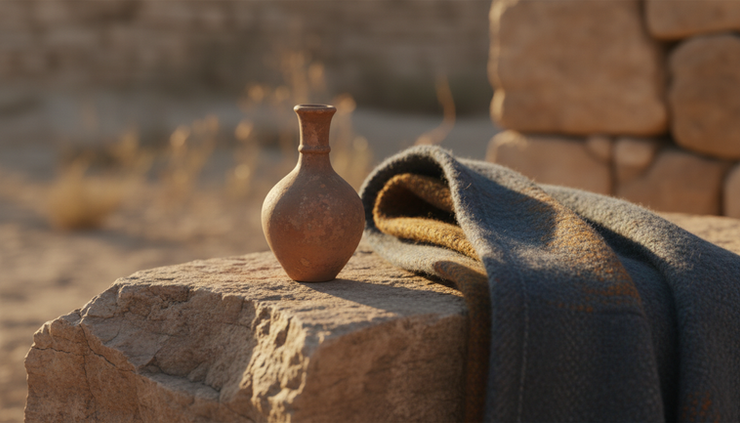
Samuel takes a vial of oil, pours it on Saul’s head, kisses him, and declares that the Lord has anointed him as leader over His inheritance. The oil is not magic. It is a sacred sign. In the world of Scripture, anointing sets a person apart for a task given by God. Priests, kings, and sometimes prophets are marked this way.
Catholic reading pays close attention to these outward signs. God often uses visible matter to communicate invisible grace, command, and mission. In the sacraments, this truth reaches its fullness through Christ. Saul’s anointing is not a Christian sacrament, but it belongs to the same biblical pattern: God works through signs that can be seen, touched, and remembered.
The wisdom here is simple and profound. Authority in Israel does not begin with ambition. It begins with being chosen and consecrated by God.
Saul does not seize the throne. Samuel does not invent the office for his own purposes. The Lord acts first. Human leadership, when rightly ordered, is a response to divine initiative.
That matters because Israel has asked for a king in a troubled way. In 1 Samuel 8, the request for a king carries a rejection of the Lord’s direct kingship. Yet God does not abandon His people. He permits the monarchy and binds it under His word. In 1 Samuel 10, divine wisdom appears as mercy. God takes a flawed request and still works within it.
This does not make every human desire holy. It shows that God can guide history even when His people misunderstand Him.
The signs reveal that God confirms His word
After the anointing, Samuel gives Saul three signs. These signs are not random wonders. They teach Saul that the prophetic word is true and that his future depends on the Lord.
The signs include:
Saul will meet men near Rachel’s tomb who tell him the lost donkeys have been found.
He will meet men carrying offerings, and they will give him bread.
He will encounter a band of prophets, and the Spirit of the Lord will come upon him.
Each sign touches part of Saul’s life.
The first sign frees him from anxiety over the donkeys. Saul began his journey as a son looking for lost animals. God shows him that the small matter has been resolved. Now Saul must lift his eyes to a greater calling.
The second sign connects him to worship. The men are on their way with offerings. Saul receives bread from them, a humble provision that suggests dependence. Even a king must receive. Even a ruler lives by grace.
The third sign is the most dramatic. Saul meets the prophets, and the Spirit of God comes upon him. He prophesies with them, and those who knew him are astonished. Their question becomes proverbial: “Is Saul also among the prophets?”
The divine truth in these signs is clear. God does not call without confirming, and He does not confirm without purpose.
The signs strengthen Saul’s faith. They also place him under responsibility. Once these things happen, Saul can no longer pretend that Samuel’s words were only human words. He has received enough light to know that the Lord is guiding him.
Catholic theology often speaks of faith as a response to God’s revelation. In this chapter, Saul receives an invitation to trust. He is not given every detail of his future. He is given enough to obey the next step.
That is often how God leads. He does not always show the whole road. He gives a word, a sign, a providence, a grace, and a duty.
The Spirit changes Saul’s heart for his mission
Samuel tells Saul that the Spirit of the Lord will come upon him and that he will be changed into another man. The chapter later says that God gave Saul another heart.
This line is one of the most important truths in 1 Samuel 10. The Lord does not merely assign Saul a task. He gives Saul what he needs for the task.
In Catholic life, grace never destroys nature. It heals, elevates, and strengthens it. Saul remains Saul. He keeps his history, family, personality, and freedom. Yet God gives him a new capacity for the work ahead.
This shows a vital truth about vocation. A call from God is not only an instruction from outside. It is also a work of grace within. The Lord forms the person He sends.
Saul’s new heart does not remove the need for obedience. That point should not be missed. Later in 1 Samuel, Saul will fail by impatience, fear, pride, and disobedience. The grace given in chapter 10 is real, but Saul can still resist God.
That makes this chapter morally serious. God’s gifts are never excuses for carelessness. A person may receive a holy mission and still need conversion every day.
The prophetic Spirit on Saul also reveals something about prophecy itself. Biblical prophecy is not mainly prediction. It is speech and action moved by God. It reveals the Lord’s will, calls people back to covenant faithfulness, and confirms divine action in history.
Saul prophesying among the prophets shows that he has been drawn into a world larger than politics. Kingship in Israel must listen to the prophetic word. The king cannot replace the prophet. The throne must bow before God.
This is one reason the chapter remains so important. It refuses to separate leadership from holiness. Power must be judged by the word of the Lord.
Saul’s silence shows humility and also mystery
After the signs occur, Saul returns home. His uncle asks where he has been. Saul tells him about finding the donkeys and about Samuel, but he does not reveal the matter of the kingdom.
This silence can be read in more than one way.
It may show humility. Saul does not boast about anointing. He does not rush to announce himself as king. He lets God bring the matter into the open.
It may also show uncertainty. Saul has received signs, but the weight of kingship may frighten him. The chapter later confirms this when Saul hides among the baggage at the public assembly.
Both readings can stand together. Human beings often meet God’s call with mixed hearts. There can be reverence and fear, modesty and hesitation, faith and confusion.
The Catholic spiritual tradition understands this well. Saints often tremble before their missions. Moses hesitates. Jeremiah feels too young. Peter falls at Christ’s knees. Mary asks how the angel’s word will come to pass, though she believes. God’s call can humble the soul because it reveals the distance between human weakness and divine purpose.
Saul’s silence keeps the focus on God’s timing. The hidden anointing must become public, but not by Saul’s self-promotion. Samuel will gather the people, and the Lord will identify the chosen man.
There is wisdom here for any reading of vocation. Some graces begin in secrecy. They must be guarded before they are announced. A word from God can be real before anyone else recognizes it.
The public choosing reveals the Lord’s rule over Israel
Samuel gathers the people at Mizpah. Before the selection of Saul, he reminds Israel of what the Lord has done. God delivered them from Egypt and from oppressors. Yet they have rejected Him by asking for a king.
This is the divine truth at the center of the chapter. Israel may have a human king, but the Lord is still the Savior. No throne can replace Him.
The selection takes place by lots, moving from tribe to clan to family until Saul son of Kish is chosen. This public process matters. The private anointing is now confirmed before the people. God’s hidden choice becomes visible.
When Saul is selected, he is nowhere to be seen. The people inquire of the Lord, and they discover that Saul is hidden among the baggage. The moment is almost humorous, but it also reveals the tension inside Saul. He is physically impressive, taller than others, but inwardly unsure.
When he stands before the people, they shout, “Long live the king.” Samuel then explains the rights and duties of kingship and writes them in a book, placing it before the Lord.
This detail is crucial. The king is not above covenant order. His authority has a shape. There is a law, a testimony, a standard before God.
In the Catholic view of moral and political life, authority is never absolute in itself. It is accountable to divine law. The ruler exists for the good of the people under God, not for self-exaltation.
That is why 1 Samuel 10 remains so sharp. It honors legitimate authority while warning against the worship of authority. Saul is truly chosen, yet Saul is not God.

The prophecy of Saul points beyond Saul
The chapter’s prophecy works on several levels.
First, Samuel gives immediate prophetic signs, and they come to pass. This confirms Samuel as the Lord’s prophet and confirms Saul’s anointing.
Second, Saul prophesies when the Spirit comes upon him. His unexpected participation among the prophets shows that God can place His Spirit where people do not expect.
Third, the whole event becomes prophetic in a larger biblical sense. Saul is the first king, but he is not the final answer. His reign will reveal the need for a king after God’s own heart. That need will lead the story toward David.
David’s line then points further still. In Catholic faith, the deepest fulfillment of kingship is Jesus Christ, Son of David, the Messiah. The word “Messiah” means “Anointed One,” as does “Christ” in Greek.
Saul’s anointing is real, but incomplete. David’s anointing will be greater, but still anticipatory. Christ’s anointing is perfect. He is Priest, Prophet, and King in one person. He does not merely receive the Spirit for a task. He possesses the fullness of the Spirit and gives the Spirit to His Church.
This is why Catholics can read 1 Samuel 10 as more than ancient history. The chapter belongs to the long preparation for the Gospel. It shows the shape of consecrated kingship, the power of the Spirit, and the need for obedience. It also shows why no earthly king can save God’s people completely.
Only Christ can be the King who does not fail.
The chapter teaches both hope and warning
The end of 1 Samuel 10 contains a divided response. Valiant men follow Saul because God touches their hearts. Others despise him and question his ability to save. Saul keeps silent.
This final scene is realistic. A call from God does not remove conflict. Some recognize grace. Others resist it. The chosen servant must live with both encouragement and contempt.
Saul’s silence here may again suggest restraint. He does not retaliate against those who insult him. At this stage, he looks promising. He has been anointed, confirmed, changed, acclaimed, and even patient.
That makes the later tragedy more sobering. A good beginning does not guarantee a faithful end.
The divine wisdom of 1 Samuel 10 is not sentimental. It does not say, “Once chosen, always safe.” It says that God truly calls, truly gives grace, and truly expects obedience.
The divine truth is equally clear. Human leadership must remain under God. Sacred signs matter. The Spirit gives strength. Public authority requires moral accountability.
The divine prophecy reaches toward Christ. Saul’s story begins with oil on the head and the Spirit’s movement in his life. Yet his life will show the weakness of a king who does not fully obey. The longing for a faithful king grows stronger, until it finds its answer in Jesus, the Anointed One who perfectly does the Father’s will.

A Catholic takeaway from 1 Samuel 10
1 Samuel 10 gives a rich lesson in how God governs His people. He acts through prophets, signs, anointing, public witness, and inner transformation. He gives Saul a real vocation and real grace. At the same time, He keeps kingship under His own divine rule.
The chapter invites a serious response. Gifts must become obedience. Calling must become service. Authority must remain humble before God.
Saul stands at the beginning of Israel’s monarchy as a man marked by oil and touched by the Spirit. His story is filled with promise, but it also carries warning. The Lord can give a new heart, but the human heart must keep turning back to Him.
The final light of the chapter shines beyond Saul. Every anointing in Israel prepares the way for the true Anointed One. In Christ, divine wisdom, divine truth, and divine prophecy meet perfectly. He is the King who does not hide from His mission, the Prophet who speaks the Father’s word, and the Savior who reigns by giving Himself for His people.


Comments